Showing posts with label Geology. Show all posts

Tuesday, 21 November 2017

All Stacked Up


The River Tees winds it's way towards  the sea near Redcar, starting 85 miles away on Cross Fell in the Pennines.

In places it is a gentle slow flowing river but in others it forms cascades and waterfalls as it carves it's way coastwards.

The picture I have chosen for today is an example of the type of rock it has to negotiate along its journey. I like the structure of this cliff with the layers of rock laid long ago and gradually worn away by the force of water.

Thursday, 30 June 2016

Magical, Mythical, Medieval


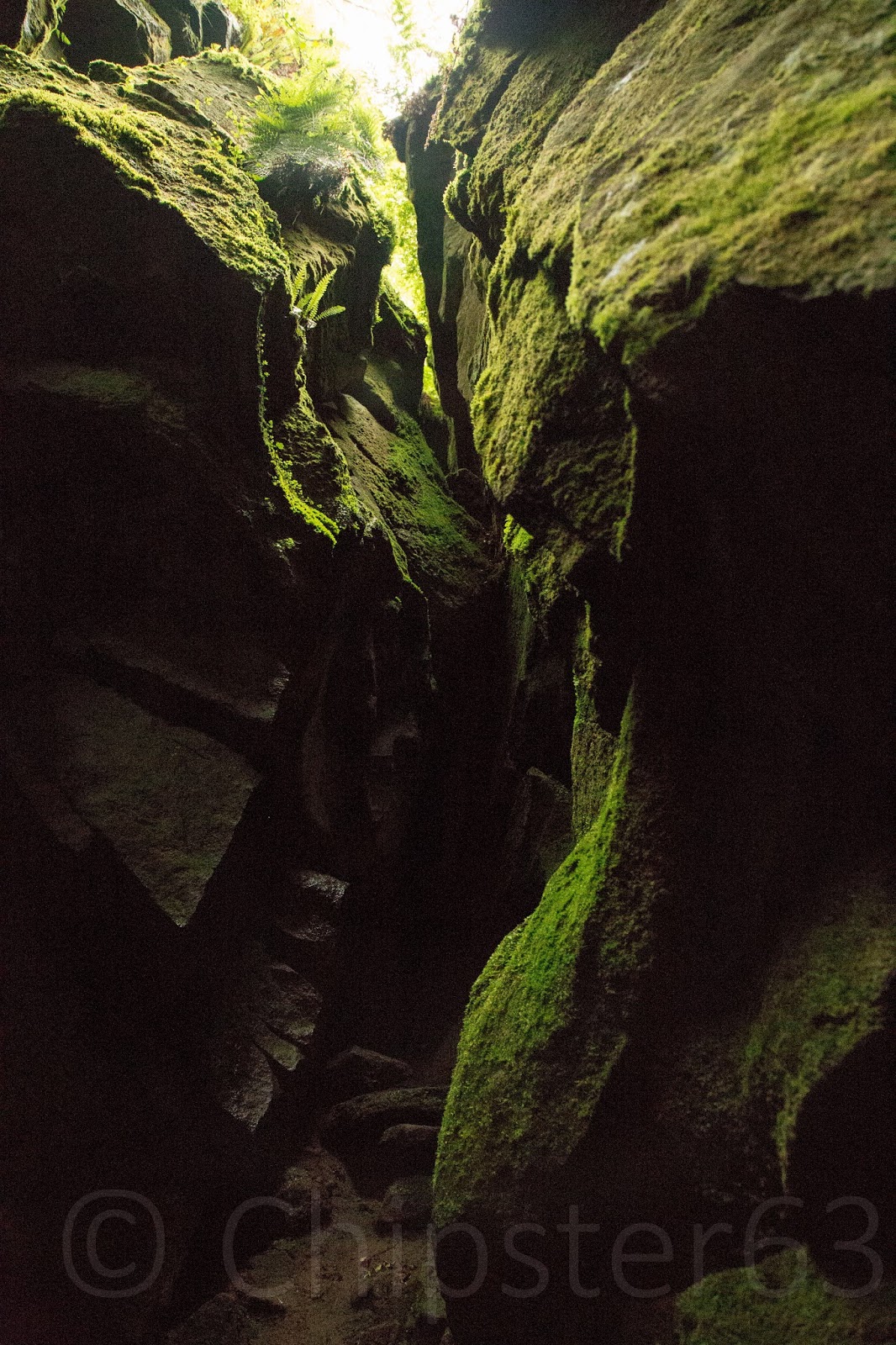
Here we are back in Lud's Church and I really hope you enjoy these shots s much as I do. Of course for me the pictures also have some associated memories which add something on a personal note. For example the first picture shows a money tree at the entrance to one section of the cleft. My daughter and I hammered a couple of pennies into the dead wood and as we did so I recalled another time when I had done the same thing on another woodland walk. It may just be me but I think the end of the trunk looks like a head facing downwards with the chin on the ground, what do you think?

You can see from these pictures how narrow the passageway was in places, he fourth and fifth pictures show a really narrow gap and it was only just possible to pass through this part although this wasn't the only way through.  I did take some pictures of my daughter squeezing through but they won't find their way onto my blog...

Wednesday, 29 June 2016

Looking for The Green Knight


The pictures for today's post are of Lud's Church in Staffordshire.

Having walked along the Roaches and across a very boggy area of moorland my daughter and I followed a woodland path through an area known as the Black Forest above the village of Gradbach. We were looking for Lud's Church but almost walked past as the path we were on passes the entrance but it would have been easy to miss as it was a cleft in the rock.

Although from today's selection it may appear quite small it is actually an immense cleft up to 15 metres high in places, and over 100 metres long but just a couple of metres wide (even less in places) which was caused by a landslip.

There are many legends associated with this wonderful place, it is said that Robin Hood had used it and the Lollards (followers of John Wycliffe) who were considered heretics used this as a place of worship in the 15th Century and that is where the name originates from.

The title of this blog post however relates to stories that it was this church that was the model for the "Green Chapel" in the medieval poem "Sir Gawain and the Green Knight".

I had seen Lud's Church featured in a TV show and determined that I would have to visit. It took some effort getting there but I have to say that it was well worth it as I am sure you will agree.

Saturday, 21 May 2016

Coastal Erosion


I didn't post anything yesterday as I was camping in North Yorkshire with the intention of getting some more pictures for my blog but the weather was dreadful and so no new pictures I'm afraid however, I did have a good time regardless of the weather, I just love being outdoors.

Anyway for today I have chosen a few more pictures of the cliffs at New Quay showing the layers and the intricate structure of the rocks.  I wonder how long it has taken to achieve such a marvelous spectacle as a result of the erosive effects of the wind, rain and sea on this rocky coastline.

These are the last pictures from my day in New Quay and tomorrow and in the days to come I have a real treat in store from a trip to Skomer so be sure to come back and see...

Wednesday, 18 May 2016

Interesting Geology


The Pembrokeshire coast around Ceridigion has some really interesting geology. Most of it is really only properly visible from offshore but here on the beach at New Quay it is possible to get up close.

I really like the different layers in the cliffs like the age rings of a tree laid down over millions of years.

I also love the rocks on the beach which are of a different material and look as if they have been melted and squeezed up out of the ground and in the final image the layer closest to the sand looks shiny and soft even though it is rock hard.

Thursday, 12 May 2016

Cliff Hangers


In stark contrast to the bright colours of my posts of the past two days I have gone for these black and white images showing off the geology of Wales' Cardigan Bay coastal cliffs. 

Seen from a boat in the bay it is possible to see the many different layers that form the cliffs and the undulating patterns which clearly show the upheaval over time. The different layers provide excellent nesting sites for the Guillemots and Kittiwakes that have made their temporary homes here facing out to sea. On a day like this when the sun was shining and there was hardly any breeze t doesn't seem like too bad a spot but when the wind and rain lashes in off the Irish Sea I am sure it is a lot more challenging spot to raise a family.